Passenger Briefing
If you would like to print a fold-able version of this Passenger Briefing please click here.
Passenger Briefing Package
Please carefully read this document before arriving at the airport.
Soon, you will be welcomed aboard a General Aviation airplane. You will find that it is very different from flying as a passenger on an ordinary commercial airplane.
This Passenger Briefing Package talks about what you can expect when flying with me, items regarding safety and comfort, as well as the flight rules I expect you to follow. Additionally, included are facts and information about the aircraft in which we will be flying as well as some information about me.
Before You Arrive at the Airport:
- Weight and Balance: Please be prepared to provide me with your fully-clothed weight (be honest, your safety is at stake) and the packed weight of each piece of luggage you desire to bring. Keep luggage weight and size to a minimum.
- Clothing: Wear comfortable/practical clothes and shoes. Dress as you would for a long journey in a small car. In the winter, remember to have a warm jacket, gloves and hat. Sunglasses are always a very good idea!
- Washroom: There is no toilet on the plane! Need I say more…?
Weather:
If the weather is bad, we do not fly. The key weather factors that affect flying are wind, clouds and visibility. If you have any questions about what is acceptable or about the weather for the duration of the flight just ask. We will not compromise safety for the sake of being somewhere at a specific time. Do not be too disappointed if a flight gets cancelled – you will get a rain check!
Airport Safety:
Please do not stray from the pilot while you are within the restricted areas of the airport. Keep away from other aircraft, even if they are not moving, especially their propellers. If you hear anyone shout “Clear!” it means an aircraft is about to start: be sure you are nowhere near it. Do not touch any aircraft.
Boarding:
Take care when boarding the aircraft to only step where the pilot indicates.
On-Board Briefing:
Seat Belts and Shoulder Straps: All passengers must wear seat belts and shoulder straps at all times while the engine is running.
No Smoking or Drinking of Alcoholic Beverages.
Your Health: If you become ill or feel any discomfort for any reason, please inform the pilot immediately.
Communication: You will be given a headset upon boarding to protect your hearing from engine noise and to provide an intercom between the plane’s occupants. The knobs on your headset control the volume. Keep the microphone very close to your mouth when speaking.
Please restrict conversation during taxiing, take-off, and landing. It is good practice for the pilot to keep a “sterile cockpit” (passenger silence) during these critical flight operations. The pilot needs to listen for instructions from airport control towers and must remain particularly alert. One exception: because passengers are an important safety resource, please point out to the pilot all nearby airborne aircraft when you see them.
Co-pilot’s Controls: If you sit in the co-pilot’s seat (front right seat), please do not touch any controls or obstruct the full extension of the yoke (the steering wheel). The pilot will demonstrate the full-extension of the yoke so that you can become comfortable with the needed clearances. Please make sure your seat is securely locked. If it starts to slip back when the aircraft ascends, just let it go – it will only slide a few inches. Whatever you do, do not grab anything in front of you!
Environment: The plane is both air-conditioned and heated. Let the pilot know if you are too hot or cold.
Emergency Operations: Prior to flight, the pilot will explain various instruments, equipment and procedures used in an emergency, including the location and use of the Emergency Locator Transmitter (ELT), the location of first-aid and survival equipment, and forced landing procedures. If anything unexpected happens, remember that the pilot has been trained to deal with emergencies, so please remain calm and do whatever the pilot asks of you.
Emergency Exits: In an emergency, the primary exit is the door in which you entered. In the unlikely case that the door is not serviceable you can swiftly kick any window to create an alternate exit.
Fire Extinguisher: A fire extinguisher is located between the front seats. To use, unlatch, remove pin, aim at fire and squeeze trigger. If sprayed while airborne, immediately open all vents.
Common Questions:
Am I fit to fly? If in doubt, ask the pilot. It’s not a good idea to fly if you have a cold or sinus problems, as the changes in air pressure can be very painful and potentially cause ear damage. Scuba diving and flying do not mix – separate them by 24 hours. If you are prone to motion sickness please take appropriate precautions.
Can I eat on-board the aircraft? Yes; however, please be considerate of the types of food you bring on-board. Please avoid bringing food likely to cause a mess. Also, avoid consuming large amounts of fluids as there are no restrooms on-board the aircraft.
Can I take photographs? Yes. The pilot will try to help you to get a good view, but remember that his first priority is always to fly the aircraft safely. This may mean not going as close as you would like to places of interest, or approaching them from the ideal direction.
How can I help? The most useful thing you can do to help is to keep a good lookout, and inform the pilot immediately if you see other aircraft.
What/Why/How …? If you have any questions about safety, the aircraft, procedures, my experience or anything else, please do not hesitate to ask!
About the Plane:
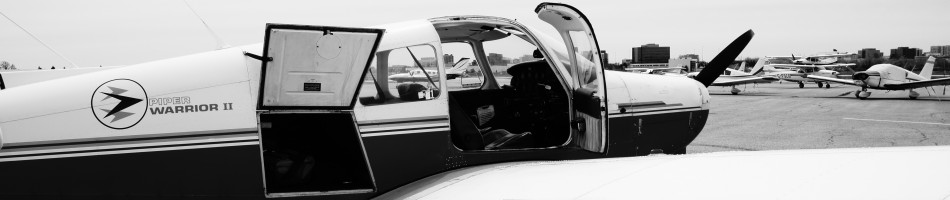
- Plane: Piper Warrior II PA-28-161
- Crew: 1 Pilot
- Capacity: 3 Passengers
- Number of doors: 1
- Length: 23.8 feet
- Wingspan: 35.0 feet
- Height: 7.3 feet
- Power : 160hp
- RPM: 2700
- Fuel Consumption: 8.8 gal/hr (33L/hr)
- Fuel Capacity: 50 gal ( 189 L)
- Useable Fuel: 48 gal ( 182 L)
- Oil Capacity: 8 quarts
- Basic Empty Weight: 1500 lbs
- Max Takeoff weight: 2440 lbs
- Max Baggage: 200 lbs
- Cruise speed no wind: 108 knots (200 km/h)
- Stall speed: 44 knots (81 km/h)
- Endurance: 5 hours and 30 minutes
- Inspection Period: Every 50 hours of flight time

 Fly Dan Air