COPA (Canadian Owners and Pilots Association)
COPA is a non-profit organization that is the voice of general aviation in Canada. Its counterpart in the United States is AOPA. What does COPA do you might ask? COPA is the largest advocate for general aviation in Canada and they fight for our rights as pilots and as passengers. They organize discounts on hotels, insurance, and car rentals. They send out a monthly newspaper that includes safety tips, gear reviews, and inspiring member stories. They work with governing agencies to ensure aviation law stays fair. They fund scholarships and run kids programs. On top of that, they provide a vast online resource for pilots to look up information on licensing requirements, airports, cross-border operations, airport classifieds, and much more. If there is an issue concerning general aviation in Canada, you can be sure COPA has a hand in it!
Becoming a COPA member costs a mere $55 annually and personally I feel like this is a bargain! For me, the monthly newspaper and knowing that someone is out there advocating for one of my greatest passions is worth the cost. Downloading helpful documents on border crossing and looking up pilot submitted information on any airport in Canada is just an added bonus.
If you are a pilot, a frequent general aviation passenger, or an enthusiast, becoming a member is a must!
Links:
->Why Join COPA?
->Member Benefits
->COPA Mission Statement
My First Solo
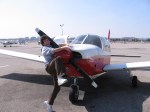
Flying solo was something I dreamed about constantly, right from the day I started my ground school lessons. On January 27th, 2006, I had a checkout flight with a senior instructor to see if I was ready for my first solo. Boy, was I nervous to be flying with someone other than my trusted instructor! After a few landings the senior pilot said that I needed to have straighter circuits before he would let me go solo. For those of you who do not know what a circuit is, I will give you a brief explanation. It is a strict airway pattern used to separate aircraft that are landing. It allows you to have stable replicable landings and gives pilots ample time to do appropriate safety checks. This landing pattern is used by all single engine piston planes as well as the big jets landing at major city airports. It is important to get it right. Being told I was not quite ready to go solo was very disappointing news, but I was so determined to move forward and achieve this milestone. I kept my head held high and kept going.
March 29, 2006, after two months of sporadic lessons thanks to winter, I went up to do a few practice circuits with my instructor. After we were done, my instructor told me to park the plane near the terminal instead of tying it down on the apron. This was an odd request that I had never received before. As we arrived, I shut the engine off assuming that I was bringing the plane to the terminal for another student to jump in and go up with my instructor. To my surprise my instructor, Adam Baxter, quickly unhooked his seatbelt, opened the door and jumped out. The senior instructor I had flown with 2 months prior jumped in and off we went to complete a couple more circuits. Again, I parked the plane just in front of the terminal and the senior instructor departed the aircraft. Before I had time to think, Adam was back and said “Take the plane up, go do one circuit and have some fun”. He then quickly closed the door and walked away. My mother got her wish: she would not know ahead of time that I was about to fly my first solo that day.
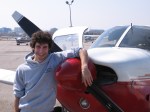
As I taxied the plane the length of Runway 33 (approximately 4000 feet) I remember singing and feeling on top of the world. Oddly, I was not nervous at all. It felt right. I took off at 11:20 am and completed my first solo circuit. I was 200ft high in the pattern, but it was straight (200ft high was probably due to the fact that I was flying a Piper Archer instead of a Warrior which has another 20 HP and I only had a couple of hours in that type of plane)! The landing was smooth. Just after touchdown the air traffic controller (ATC) came on and said “Congratulations on your first solo”. I taxied the plane back to the tie-downs sporting the largest grin of my life. Adam came running with a camera and took a few photos (featured above). After it was all done, I had the pleasure of driving to my parents house and reciting the days exciting events.
City tour with Joanna
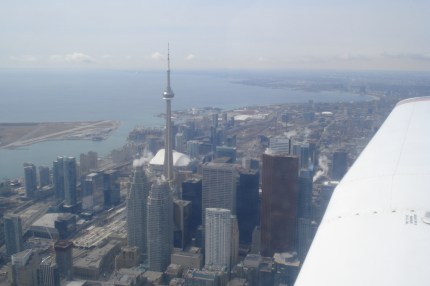
On March 10th, 2012, Joanna and I took to the skies for 1.2 hours of fun circling downtown Toronto. We had beautiful weather and the city centre tower was nice enough to let us tour at a low altitude while being able to go south of the tower!
Check out the rest of the photos from our adventure
-> Joanna – Toronto City Tour – March 10th, 2012.
Be sure to take a look at more awesome aviation photos from Fly Dan Air
-> Photos
Interesting Notes:
On short final the active runway was changed from 21 to 15 as the winds had changed direction and you always want to land as into the wind as possible. The tower kept our landing clearance to runway 21 and all other planes in the landing pattern were diverted to runway 15. While entering the flare, I decided to overshoot the runway and set up a new approach for runway 15 in order to take advantage of more optimal conditions. While turning base for runway 15 we were treated to see a small jet land!
Becoming a Pilot, from the ground up!
Why join the club?
Remember how exciting it was when you finally got your driver’s license? Remember how many new possibilities there were and how you felt on top of the world? Multiply that by 1,000,000 and you will have some idea of what it feels like to be a pilot!
When you get to fly over 200km an hour and do not have to follow roads, you will be amazed at how small the world around you becomes. Instead of sitting in your car being slowed down by traffic, customs, and bad drivers, you are flying high above these frustrations, enjoying the scenery and getting to your destination in a fraction of the time. Almost every area in Canada and the United States has a general aviation airport so there is only a small list of places you can not go. If you do a little more training to receive your float plane rating, that list vastly shrinks.
Anyone can be a pilot!!! With some dedication and discipline, getting your pilots license is attainable. Your only limitations are health and money. If those issues do not get in the way and this is something you want, go do it! Whether you want to fly somewhere fun or just zip around the skies, you will get to see some great scenery and feel a great sense of accomplishment. The aviation community as a whole is friendly, fun, and knowledgeable. Being a part of it will change the way you travel forever.
Fam Flight
If you have decided that you want to be a pilot (good for you!) or you are on the fence, the Fam Flight is going to be your first stop. This is a chance for you to experience General Aviation with a qualified flight instructor having made no commitment. This flight is meant to be enjoyable, safe, and stress-free. The instructor will take you up, hand you the controls (while keeping a close eye on you and the aircraft!) and let you see and feel what flying is all about. It is normal to be nervous during this flight if it is your first time in a small aircraft. There are many new sensations, which you will get used to rather quickly, simply because you are not in a large commercial jet. It is also normal to be nervous as you don’t entirely understand how airplanes work. This will subside as your training progresses. Things may look complicated, but you learn everything step-by-step until you have mastered it all. Flight instructors are wonderful at allowing students to work on one thing at a time until they are comfortable. If you have completed your Fam Flight and are ready to continue the journey, the next step is to decide what type of pilot license you want to obtain.
Licenses
There are two starter licenses that you can work towards in Canada. The Recreational Pilot Permit and the Private Pilot License. The private license comes with more privileges and more room for growth, but it is also more costly and time consuming to obtain than the recreational permit. Costs are approximate and vary by school as well as student progression. Here are the requirements for both:
Recreational Pilot Permit
Fly solo or carry ONE passenger anywhere in Canada during the daytime in Visual Flight Rules.
- Minimum age 16
- Medical Category 4 (family doctor medical)
- Written exam
- Minimum total flying time of 25 hours
- Flight Test
Approximate cost: $7,000
Private Pilot License
Fly solo or carry passenger(s) anywhere in Canada and across the border during the daytime in Visual Flight Rules. You can upgrade this license to a commercial license or add on any of the following: Night rating, VFR over-the-top rating, Float rating, Instrument rating, Multi-engine rating.
- Minimum age 17
- Medical Category 3 (Aviation medical)
- 40 Hours of Ground School
- Written exam
- Minimum total flying time of 45 hours
- Flight test
Approximate cost: $12,000
Training
Here are some simple tips that will save you money and ensure you get your license as fast as possible.
- Make sure you can afford it. The last thing you want to do is get half way through your training and then have to stop because you ran out of money. Talk to your flight school about the realistic costs your training will set you back before you start. Most likely you can pay on a per flight basis, but I suggest that you have a plan to ensuring the funds are available.
- Fly as often as you can. The more you fly, the faster you will learn and pass your final flight test. This will result in less overlap/repeated topics during your training and in turn save you $$$.
- Show up 15 minutes before each lesson. Check the weather, NOTAMS, and do your walk around!
- Study on your own. Whether it is regularly reading up on the topics you are going to be practising or chair flying (sitting in a chair with your eyes closed and mentally reviewing flight exercises), it will make you a prepared student and result in less time paying your instructor to teach you.
- If you get frustrated with an exercise, don’t worry. It is amazing how your brain organises things when you take a step back and have a good nights sleep.
- Enjoy every second of it!
Questions
If you have any further questions please do not hesitate and click here to send me an email.
Happy National Aviation Day Canada!!
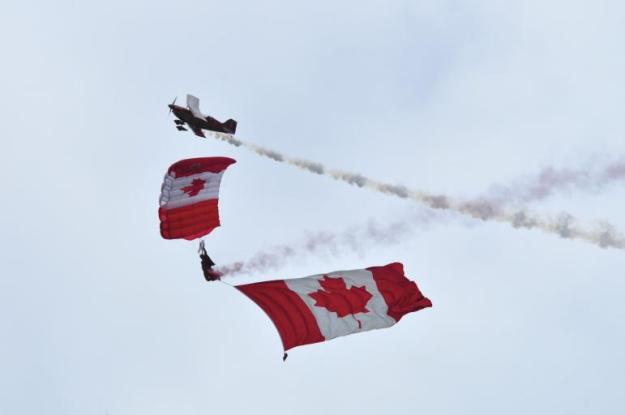
103 years ago on February 23, 1909, the Silver Dart took Canada’s first powered flight over Bras d’Or Lakes in Baddeck, Nova Scotia. Today we celebrate National Aviation day. It is a day for everyone who has an interest in those big metal machines that fly to celebrate just how far we have come. If you are a pilot or a passenger, take the time to reflect on how your life has been made better because of aviation. If you are interested in getting your pilot’s license there is no better day to start doing some research and making your dream come true. I will work on posting some information about obtaining a pilots license in Canada and all the fun stuff that is involved.
Click here to take a look at some of the amazing achievements Canadian’s have had in the field of aviation over the last century.
If you would like more information about National Aviation Day in Canada please click here.
 Fly Dan Air