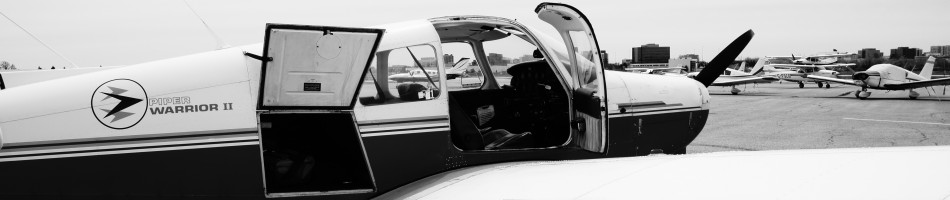
Becoming a Pilot, from the ground up!
Why join the club?
Remember how exciting it was when you finally got your driver’s license? Remember how many new possibilities there were and how you felt on top of the world? Multiply that by 1,000,000 and you will have some idea of what it feels like to be a pilot!
When you get to fly over 200km an hour and do not have to follow roads, you will be amazed at how small the world around you becomes. Instead of sitting in your car being slowed down by traffic, customs, and bad drivers, you are flying high above these frustrations, enjoying the scenery and getting to your destination in a fraction of the time. Almost every area in Canada and the United States has a general aviation airport so there is only a small list of places you can not go. If you do a little more training to receive your float plane rating, that list vastly shrinks.
Anyone can be a pilot!!! With some dedication and discipline, getting your pilots license is attainable. Your only limitations are health and money. If those issues do not get in the way and this is something you want, go do it! Whether you want to fly somewhere fun or just zip around the skies, you will get to see some great scenery and feel a great sense of accomplishment. The aviation community as a whole is friendly, fun, and knowledgeable. Being a part of it will change the way you travel forever.
Fam Flight
If you have decided that you want to be a pilot (good for you!) or you are on the fence, the Fam Flight is going to be your first stop. This is a chance for you to experience General Aviation with a qualified flight instructor having made no commitment. This flight is meant to be enjoyable, safe, and stress-free. The instructor will take you up, hand you the controls (while keeping a close eye on you and the aircraft!) and let you see and feel what flying is all about. It is normal to be nervous during this flight if it is your first time in a small aircraft. There are many new sensations, which you will get used to rather quickly, simply because you are not in a large commercial jet. It is also normal to be nervous as you don’t entirely understand how airplanes work. This will subside as your training progresses. Things may look complicated, but you learn everything step-by-step until you have mastered it all. Flight instructors are wonderful at allowing students to work on one thing at a time until they are comfortable. If you have completed your Fam Flight and are ready to continue the journey, the next step is to decide what type of pilot license you want to obtain.
Licenses
There are two starter licenses that you can work towards in Canada. The Recreational Pilot Permit and the Private Pilot License. The private license comes with more privileges and more room for growth, but it is also more costly and time consuming to obtain than the recreational permit. Costs are approximate and vary by school as well as student progression. Here are the requirements for both:
Recreational Pilot Permit
Fly solo or carry ONE passenger anywhere in Canada during the daytime in Visual Flight Rules.
- Minimum age 16
- Medical Category 4 (family doctor medical)
- Written exam
- Minimum total flying time of 25 hours
- Flight Test
Approximate cost: $7,000
Private Pilot License
Fly solo or carry passenger(s) anywhere in Canada and across the border during the daytime in Visual Flight Rules. You can upgrade this license to a commercial license or add on any of the following: Night rating, VFR over-the-top rating, Float rating, Instrument rating, Multi-engine rating.
- Minimum age 17
- Medical Category 3 (Aviation medical)
- 40 Hours of Ground School
- Written exam
- Minimum total flying time of 45 hours
- Flight test
Approximate cost: $12,000
Training
Here are some simple tips that will save you money and ensure you get your license as fast as possible.
- Make sure you can afford it. The last thing you want to do is get half way through your training and then have to stop because you ran out of money. Talk to your flight school about the realistic costs your training will set you back before you start. Most likely you can pay on a per flight basis, but I suggest that you have a plan to ensuring the funds are available.
- Fly as often as you can. The more you fly, the faster you will learn and pass your final flight test. This will result in less overlap/repeated topics during your training and in turn save you $$$.
- Show up 15 minutes before each lesson. Check the weather, NOTAMS, and do your walk around!
- Study on your own. Whether it is regularly reading up on the topics you are going to be practising or chair flying (sitting in a chair with your eyes closed and mentally reviewing flight exercises), it will make you a prepared student and result in less time paying your instructor to teach you.
- If you get frustrated with an exercise, don’t worry. It is amazing how your brain organises things when you take a step back and have a good nights sleep.
- Enjoy every second of it!
Questions
If you have any further questions please do not hesitate and click here to send me an email.

 Fly Dan Air
Leave a comment